


There’s a tectonic shift happening in digital experience platforms (DXPs).
The DXP dream – where everything from content management to marketing tools is neatly bundled into one platform – seemed like the perfect solution for a while. But in reality, businesses have realized that a one-size-fits-all approach can feel more like a straitjacket than a solution. Take Acquia as an example. Acquia is a digital experience platform (DXP) optimized for Drupal. The platform provides hosting, development tools, and multisite management capabilities. Acquia is not Drupal itself – Drupal is an open-source CMS, while Acquia offers commercial hosting and tools for Drupal sites.
Over time, Acquia has added marketing, customer data, and digital asset management products, many through acquisitions, so teams that mainly need Drupal hosting and development workflows can end up working within a larger suite than they need.
The right Acquia alternative depends on what you need to replace: hosting, your CMS, or another tool. This guide compares options for keeping Drupal or moving to a different CMS or DXP.
Why organizations are looking for alternatives to Acquia
A team may consider an Acquia alternative when its current setup creates too much deployment work, limits the control it needs, or makes required integrations difficult to maintain.
The level of control depends on the specific Acquia product. Acquia Source CMS, for example, is a software-as-a-service CMS with integrated AI. Its product guide says customers cannot modify the underlying Drupal code or install contributed modules from Drupal.org. Custom components, APIs, and webhooks remain available. Those restrictions apply specifically to Source CMS, so check the capabilities of the Acquia product you use before comparing alternatives.
These trade-offs can give teams three reasons to consider a move:
- Flexibility: If your current product limits the code or module access your team needs, a different setup may offer more control.
- Speed: If configuration, testing, or deployments require too much repetitive work, different workflows may reduce that overhead.
- Integration: If required connections are difficult to build or maintain, another setup may be a better fit. First establish whether the constraint comes from the product, your plan, or the implementation.
For Perforce, deployment overhead was a practical concern:
We were having to manage each site’s subtheme in a separate repository on Acquia for each of our sites. And so any deployments or changes would have to be provisioned out to each site, which was taking a lot of time.”
- Jeremy Pieper, Web Development Manager at Perforce
Once you know what needs to change, you can narrow your search. Acquia alternatives fall into three categories:
- Digital Experience Platforms (DXPs): Comprehensive platforms that include content management, hosting, and digital experience tools.
- Customer Data Platforms (CDPs): Platforms that unify customer data from various sources. Examples include Salesforce Data Cloud, Adobe Real-Time CDP, and Twilio Segment.
- Marketing and Cloud Services: Tools focused on specific functions like marketing automation, digital asset management, and hosting infrastructure.
Here’s an overview of some of Acquia’s top alternatives:
Pantheon: The top Acquia alternative
Image
Pantheon enables you to build, run, and manage Drupal and WordPress sites with shared development workflows.
Pantheon is the best Acquia alternative for Drupal teams, running the same Drupal core on load-balanced containers with no CMS migration required. Keeping Drupal still requires a platform migration: your code, database, and files must move, and Acquia-specific services need assessment. This applies to compatible Drupal sites; Source CMS should be assessed separately.
Smooth multisite management
Pantheon's Upstreams feature allows you to manage multiple Drupal sites from a single source. This reduces complexity and ensures consistency across site networks without extensive customization.
Upstreams feels like an out-of-the-box solution. It is a silver bullet helping us push out broad changes to our sites in no time.”
- Jeremy Pieper, Web Development Manager at Perforce
Both Acquia and Pantheon enable multisite management from a shared codebase. Acquia's Site Factory provides centralized governance while supporting multiple codebases, profiles, and custom modules.Pantheon's Upstreams allows individual sites to diverge and customize independently. The practical difference is how each platform balances shared standards with site-level control.
Integration capabilities
Pantheon provides REST APIs for site management and deployment automation. The platform integrates with continuous integration tools, version control systems, and third-party services. This allows teams to build custom workflows and connect Pantheon with existing development toolchains.
Development workflow
With tools like Multidev, Pantheon lets teams spin up multiple development environments in parallel. This enables parallel development and real-time collaboration without workflow conflicts.
Image
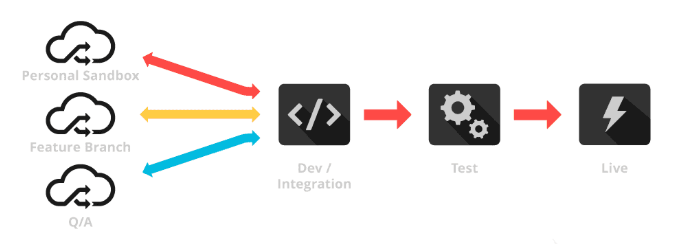
No more fighting with clunky workflows or waiting for approval – everyone can work together, in real time, on their own terms. This leads to faster deployments, smoother processes, and ultimately, better outcomes for your digital experience.
Pantheon’s Multidev feature was a huge bonus. Multiple developer environments allow us to develop with partner agencies in a much more agile way.”
– Jim Alberque, GIS and Emerging Technology Manager at The City of Raleigh
For a closer look at how these workflows support your existing site, explore our Drupal hosting platform.
Other Acquia alternatives
While Pantheon stands out as a leading alternative to Acquia, the digital experience space is full of platforms offering unique features and strengths. Let’s explore some of these other options:
1. Sitecore
Image
Sitecore is an enterprise DXP that includes content management, personalization, and omnichannel delivery. The platform uses machine learning and AI capabilities to deliver tailored content and individualized customer journeys. Legacy Sitecore XP, sold for on-premises deployment, requires .NET Framework 4.8 and SQL Server. SitecoreAI is delivered as SaaS.
Sitecore does not publish pricing, and implementation typically requires specialist partner support. The platform works best for large organizations with sophisticated marketing capabilities and the resources to support enterprise-level complexity. For companies looking for a more streamlined, budget-conscious option, Sitecore may be overkill.
Don’t forget to check out our post on Sitecore alternatives!
2. Bloomreach
Image
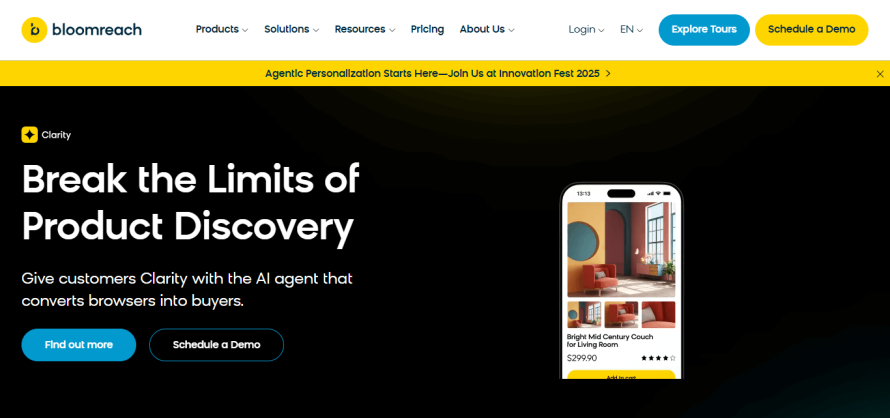
Bloomreach is an AI personalization platform for ecommerce, which also sells an enterprise headless CMS. The platform focuses on AI-powered search and discovery tools to improve product findability and conversion rates. Bloomreach works best for e-commerce businesses looking to deliver personalized shopping experiences.
One of Bloomreach’s strongest features is its ability to provide AI-powered search and discovery tools. With these, businesses can improve customers’ ability to find products, driving better conversion rates and customer satisfaction. The trade-off? Bloomreach's search and AI features are aimed at ecommerce catalogs, so smaller sites may not need them. For organizations with a focus on e-commerce and search optimization, Bloomreach’s platform is a strong option.
3. Optimizely
Image

Optimizely is a DXP that combines content management with experimentation and testing capabilities. The platform includes A/B testing tools that allow businesses to run experiments at scale and measure optimization across the customer journey. Optimizely leads with its CMS, with experimentation available alongside it.
The platform's constant focus on testing and experimentation requires ongoing attention, and companies that don’t have the resources to dedicate to this level of analysis may find it more resource-intensive than needed.
Explore our post on Optimizely alternatives!
4. Adobe Experience Manager (AEM)
Image
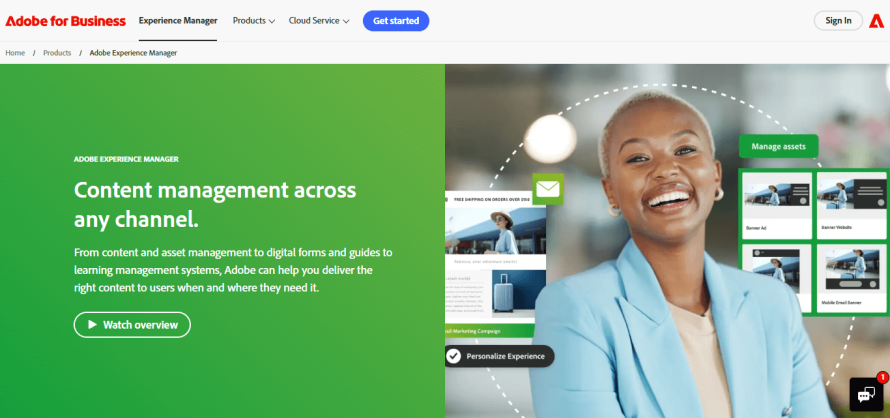
Adobe Experience Manager is a comprehensive DXP that includes content management, digital asset management, and multi-channel content delivery. The platform manages content across websites, mobile apps, and email campaigns. AEM runs on Java and integrates seamlessly with other Adobe Experience Cloud tools. AEM 6.5 LTS, deployed on-premises, requires substantial server resources. AEM as a Cloud Service is Adobe-hosted and auto-scaling.
Adobe does not publish AEM pricing, and deployments typically involve Adobe or a certified partner. Smaller businesses or teams that don’t need the full AEM’s capabilities might find it overkill for their needs. For larger organizations with complex digital asset management requirements, AEM is a strong contender, but expect to pay a premium for its capabilities.
5. Liferay
Image
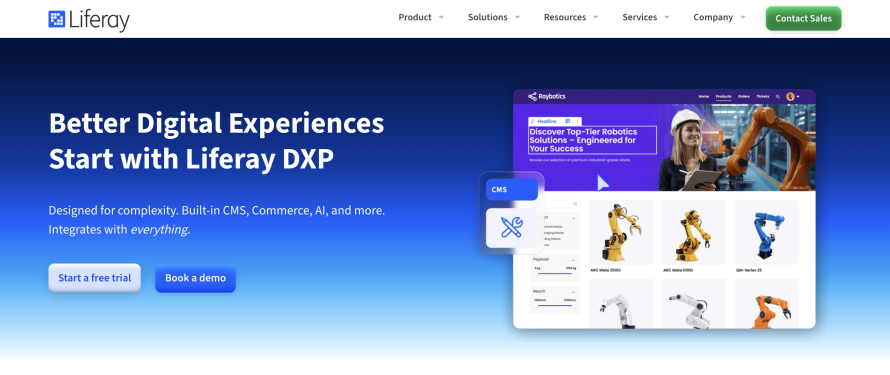
Liferay is an open-source platform for building portals and digital experiences. The platform runs on Java with a modular OSGi architecture and includes workflow automation, personalization capabilities, and headless architecture support.
Organizations value Liferay's open-source foundation, which allows extensive customization and integration possibilities. However, custom extension work on Liferay is Java-based and tailored to specific business needs.
6. Kentico
Image
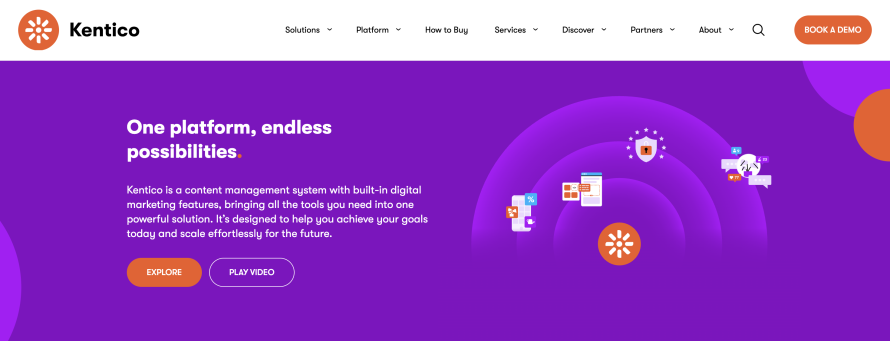
Kentico is a DXP that provides integrated marketing and content management capabilities. Built on ASP.NET Core and running on .NET 8 through 10, Xperience by Kentico includes marketing automation, personalization, A/B testing, and email marketing. Kentico offers a marketer-friendly interface with low-code tools that enable page creation and campaign design without extensive developer support.
The platform integrates naturally with Microsoft technology stacks. Organizations appreciate Kentico's marketer-friendly interface and comprehensive feature set, though the platform requires SQL Server 2019 or later.
7. Upsun (formerly Platform.sh)
Image
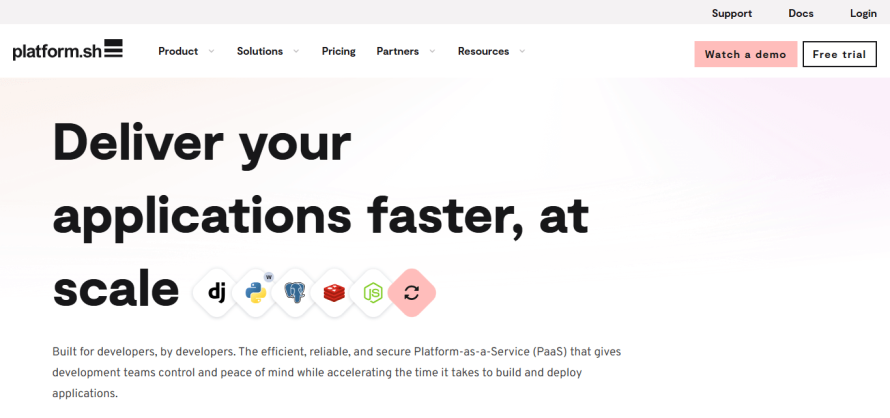
Upsun is a platform-as-a-service that supports WordPress, Drupal, PHP 8.4 and 8.5, Node.js, Python, and Ruby environments. The platform provides Git-based workflows and enables teams to automate the web application lifecycle from development to deployment to scaling. Upsun's integration with Git workflows makes it suitable for agile teams that need to iterate quickly and consistently.
Upsun works best for development teams looking for infrastructure automation and control. The platform requires businesses to integrate their own marketing and content tools, making it better suited to technically capable teams rather than organizations seeking comprehensive out-of-the-box marketing features.
Unlike Acquia's Site Factory which centralizes governance, Upsun gives each site independent Git workflows and deployment pipelines. This provides more flexibility but requires teams to manage each site's infrastructure separately. Acquia standardizes the multisite experience while Upsun optimizes for independent site control.
8. Magnolia CMS
Image
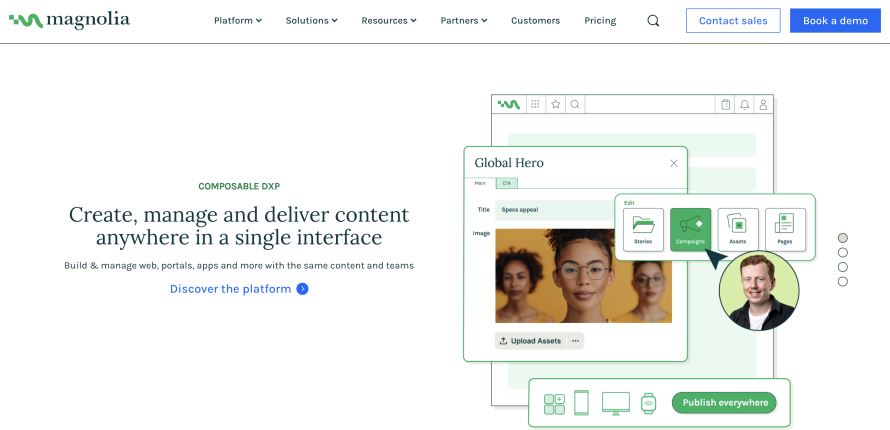
Magnolia CMS is a DXP that combines traditional CMS capabilities with headless functionality. The platform runs on Java and uses JCR (Java Content Repository) for content storage. Magnolia provides visual WYSIWYG editing tools alongside API-driven content delivery, supporting both traditional page editing and API-first approaches.
Magnolia's hybrid headless architecture allows organizations to use traditional page editing or API-first approaches as needed. The platform includes multi-language support, personalization, and AI agents for content and asset workflows. Magnolia runs on Java, so implementation usually involves developer support.
9. Contentful
Image
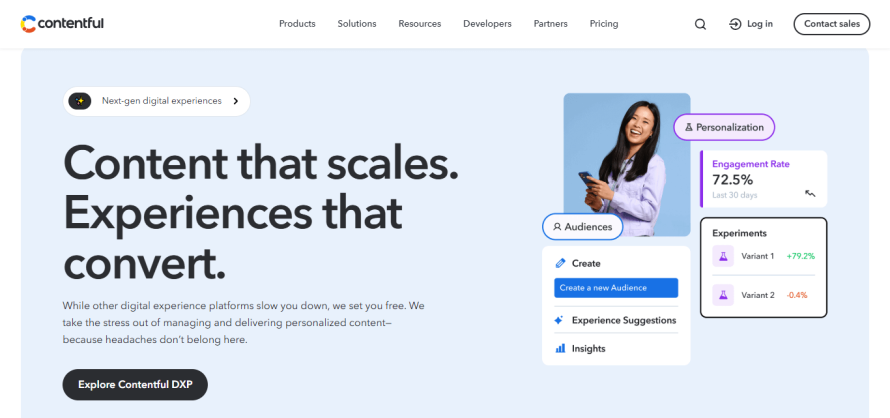
Contentful is a headless CMS that manages content in a central hub and delivers it across digital touchpoints. The platform provides REST and GraphQL APIs for content delivery across any frontend framework. Contentful allows teams to choose frontend technologies independently from content management.
Contentful suits teams that have already committed to a headless build and have developers to integrate the front end. However, as with any headless CMS, Contentful requires more technical knowledge and developer involvement compared to traditional platforms. The platform requires developer resources for implementation. Organizations comfortable with API-driven architecture will benefit most from Contentful's approach.
How to choose the best Acquia alternative for your enterprise
With these differences in mind, use your current setup and your team’s requirements to narrow the shortlist:
- Your team’s needs and expertise: Is your team made up of developers who are comfortable with complex, customizable systems? Or are you looking for something that’s easy to use and quick to implement, with less reliance on technical resources?
- Support: Consider whether you need continued Drupal support - Pantheon and Upsun both maintain strong Drupal capabilities, while other platforms like Sitecore or AEM would require migrating to their proprietary systems.
- Current CMS: For a Drupal site on Acquia Cloud Platform, changing hosts can let you keep the CMS. Switching to a different CMS requires planning a rebuild. If you use Source CMS or another Acquia product, assess its migration options separately. If you want to change hosting but keep Drupal, Pantheon provides Drupal hosting without requiring a CMS migration.
- Customization vs. out-of-the-box functionality: Do you need a solution that gives you complete control over every aspect of your digital experience, or are you looking for something with built-in features like personalization, A/B testing, or content management?
- Scalability and performance: Consider how your platform will scale as your business grows. Will the platform handle increased traffic and new digital initiatives without slowing down?
- Integration capabilities: The digital ecosystem is vast and your platform will need to integrate with various other tools – CRM systems, marketing automation, analytics, and more.
- Cost considerations: The cost of a new platform can vary greatly depending on the scale of your operations, the complexity of your needs, and the features you require. Make sure to consider both your current budget and the long-term costs of ownership as you evaluate your options.
To work through these factors in more detail, use our Acquia alternative evaluation framework to assess your shortlist, platform requirements, and migration plans.
Take the next step: Switch to Pantheon
Switching to Pantheon means giving your team the tools to build faster, collaborate more effectively, and deliver exceptional digital experiences.
Discuss your site requirements and platform fit with our team before you plan a move.
Frequently asked questions
Below are answers to common questions about Drupal, migration, and alternatives to Acquia’s other products.
Is Acquia a DXP?
Acquia is a digital experience platform (DXP) optimized for Drupal. The platform provides hosting, development tools, and multisite management capabilities. Acquia is not Drupal itself - Drupal is an open-source CMS, while Acquia offers commercial hosting and tools for Drupal sites.
If I'm already on Drupal, is it easier to stick with Acquia or move to something like Pantheon?
If you decide to move a Composer-managed Drupal site, follow Pantheon’s Composer migration guide. Both platforms support the same Drupal core, so the underlying CMS doesn't change. Custom modules and configurations may require adjustment, but the core Drupal investment carries forward. Weigh those adjustments against the workflow benefits described in the Pantheon section to decide whether a move is worthwhile.
I'm looking for a more flexible DXP than Acquia, what should I consider?
- Pantheon and Upsun provide flexibility in tool choice and multisite customization.
- Contentful and Magnolia offer headless or hybrid content delivery for teams ready to manage the frontend integration.
- Sitecore and AEM also offer headless and API options, but they're proprietary, licensed platforms, so moving to either means rebuilding on a new CMS. Compare edition, licensing, and migration scope against your requirements.
What are the best alternatives to Acquia's Customer Data Platform?
Customer Data Platform alternatives to Acquia include:
- Adobe Real-Time CDP: Manages customer data and provides journey orchestration
- Salesforce Data Cloud: Unifies customer data from multiple sources for customer engagement.
- Twilio Segment: Collects, transforms, and routes customer data in real time.
- BlueConic: Creates unified customer profiles for individual customers.
- ActionIQ (acquired by Uniphore): Delivers customer insights and personalized marketing campaigns.
- Amperity: Focuses on customer data unification and identity resolution for brands and retailers.
Which marketing automation platforms can replace Acquia's marketing tools?
Marketing automation alternatives include:
- HubSpot Marketing Hub: Combines marketing automation with integrated CRM.
- Salesforce Marketing Cloud Account Engagement: Provides B2B marketing automation.
- Adobe Marketo Engage: Offers lead management and account-based marketing.
- Oracle Eloqua: Delivers enterprise marketing automation capabilities.
- Act-On: Provides marketing automation for mid-market businesses.
- Zoho CRM: Offers affordable marketing automation for smaller organizations.
What are alternatives to Acquia's DAM (Digital Asset Management)?
Digital Asset Management alternatives include:
- Adobe Experience Manager: Provides integrated DAM within its DXP.
- Brandfolder: Focuses on brand asset organization and distribution.
- Canto: Specializes in media asset management and collaboration.
- Cloudinary: Offers cloud-based image and video management.

